
CIJ Ink Selection and Solvents for Plastic, Glass and Metal
CIJ ink selection starts with the surface you print on: most plastics, glass and metal need a fast-drying solvent ink, usually MEK-based, while dark or hard-to-wet surfaces may need a pigmented white or yellow ink. The make-up solvent must always be the one matched to that ink and printer.
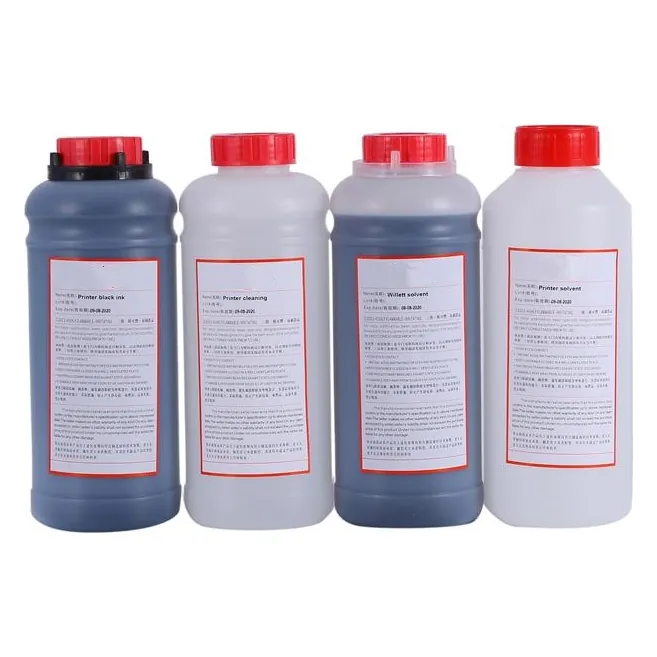
This guide explains the main CIJ ink families, how they behave on plastic, glass and metal, why make-up matters, and how to test an ink before you switch a whole line. The examples are compatible inks that Shenzhen Mufeng Technology Limited Company supplies for common continuous inkjet (CIJ) printer brands.
What is CIJ ink and what is make-up solvent?
CIJ ink is a low-viscosity ink made of dye or pigment, resin and solvent. The resin is what bonds the code to the product; the solvent carries it and then evaporates so the code dries in seconds.
Make-up solvent (also called make-up or thinner) is added by the printer automatically. In a CIJ system the solvent evaporates continuously, the ink viscosity rises, and the printer adds make-up to bring viscosity back to its set value and prevent clogging. Using the wrong make-up changes the ink chemistry, which can affect adhesion, drying and print quality.
CIJ ink selection by material
| Material | What makes it difficult | Ink type to consider | Examples from our range |
|---|---|---|---|
| Rigid plastics (PET, PVC, PP bottles and caps) | Smooth, non-porous surface; codes must survive handling | MEK-based black high-adhesion ink | IC-270BK (metal, glass, PP, PET), IR-236BK (metal, glass, PVC and other plastics) |
| Polyolefins (PE, HDPE, BOPP films) | Low surface energy, ink can bead or rub off | Ink specified for PE/PP/HDPE, sometimes pigmented | Leibinger 70000-00030 (PE, BOPP, PP, HDPE), 5151 yellow micropigment ink for HDPE, KGK CN505 (PVC, PE, PP) |
| Glass (bottles and jars) | Very smooth; condensation on cold or filled glass | MEK-based ink with glass adhesion | Willett 201-0001-601 black (plastics, glass, metal), 1072K high-adhesion black |
| Metal (cans, lids, parts) | Oil or coating residues on the surface | MEK-based black, or MEK-free ink where required | IR-236BK, FB660 MEK-free ink (rigid plastics and metals) |
| Dark plastics, rubber, cables and pipes | Black ink is not visible on a dark surface | Pigmented white or yellow ink | JP-W73 white (dark rubber, PVC pipes, glass, metal), JP-Y108 yellow, Linx 1039 yellow, KGK-CP247 white |
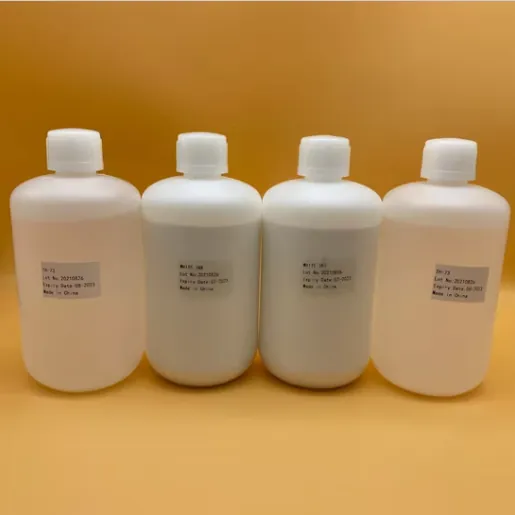
Plastic: match the ink to the polymer
"Plastic" covers very different materials, so CIJ ink selection for plastic begins with the polymer type. PET and PVC are usually easier to code with a standard MEK black ink. PE, PP and HDPE have low surface energy, so the ink should be one that is specified for these polymers.
For example, our Leibinger-compatible 70000-00030 black ink is specified for PE, BOPP, PP and HDPE as well as metal, glass and cardboard without pre-treatment. For yellow codes on HDPE, the 5151 yellow pigment ink for Markem-Imaje printers is used together with its 5152 make-up.
Glass: drying and condensation
Glass is smooth and non-porous, so adhesion depends on the ink resin rather than absorption. Problems usually come from the line, not the ink: bottles that are cold, wet or coated with condensation after filling will not hold any ink well. Dry the coding area with an air knife or move the printer to a dry point on the line.
MEK-based black inks such as the Willett 201-0001-601 compatible black ink are designed for plastic bottles, metal cans and glass jars. For Hitachi UX printers, 1072K high-adhesion black ink is used with S1018 make-up on plastics, metals, glass, food and pharmaceutical packaging.
Metal: clean surface first
Metal cans, lids and parts often carry oil, lubricant or varnish. A clean, dry surface is the most important factor for adhesion. Use a fast-drying MEK ink such as the IR-236BK black ink for Domino A-series printers, which is specified for metal, glass, PVC and other plastics.
If your site restricts MEK, look at MEK-free inks. The FB660 black ink for Markem-Imaje 9018/9028/9029 uses an ethyl acetate and ethanol base for rigid plastics and metals, with A661 make-up.
Pigmented inks for dark surfaces
Pigmented CIJ ink contains fine solid particles (often white or yellow) that stay visible on black or dark materials. It is the usual choice for cables, rubber hoses, dark PVC pipes and dark plastic parts.
Pigments can settle, so pigmented inks need printers designed for them and regular operation. Follow the printer maker's guidance on agitation and shutdown routines. Our JP-W73 white ink for Hitachi printers is a pigmented MEK ink for dark rubber, PVC pipes, glass and metal.
Always pair ink with the matching make-up
Each ink is formulated with a specific make-up. Examples from our range:
- Linx 1240 black ink with Linx 1512 solvent; Linx 1039 yellow with 1512 or 1505.
- Hitachi-compatible 1072K ink with S1018 make-up.
- Markem-Imaje 5151 yellow with 5152 make-up; FB660 with A661 make-up.
- Leibinger inks with the matching Leibinger make-up solvent.
Do not mix ink families in one printer. When changing to a different ink type, follow the printer manufacturer's flushing procedure.
How to choose and test a CIJ ink: 6 steps
- Identify the printer model. Brand, model and any chip or RFID requirement decide which compatible inks fit.
- Identify the material. Note the exact substrate (for example HDPE bottle, PET preform, glass jar, coated can) and its colour.
- Note the conditions. Line speed, temperature, condensation, oil and whether the code must resist rubbing, alcohol or sterilisation.
- Shortlist ink and make-up pairs. Choose an ink that is specified for that material, with its matching make-up.
- Test on real products. Print on production samples, let them dry, then rub with a thumb and, if needed, test with the solvents or conditions your product will see.
- Check storage and shelf life. Store ink sealed and away from heat. Expired ink can show abnormal viscosity and clog nozzles; IR-236BK, for example, has a shelf life of about two years.
Need a printer as well as ink? See our new CIJ printers. For high-resolution codes on cartons and flat packs, our sister site tijinkjet.com covers thermal inkjet (TIJ) cartridges, including solvent quick-drying cartridges.
FAQ: CIJ ink selection
Which CIJ ink is best for plastic bottles?
For PET and PVC bottles, a MEK-based black ink specified for plastics is the usual choice. For PE, PP or HDPE, choose an ink that is specified for those polymers and test it on your bottles.
Can one CIJ ink print on plastic, glass and metal?
Some MEK-based inks, such as the Willett 201-0001-601 compatible black ink, are specified for plastics, glass and metal. Always confirm adhesion on your actual products, because coatings and condensation make a big difference.
Can I use any make-up solvent with my CIJ ink?
No. Use the make-up that is matched to the ink, for example Linx 1240 ink with 1512 solvent. The wrong make-up changes viscosity and chemistry and can cause poor adhesion or clogging.
What ink should I use on black cables or rubber?
Use a pigmented white or yellow CIJ ink, such as JP-W73 white or JP-Y108 yellow for Hitachi printers, so the code stays visible on the dark surface.
How do I order CIJ ink from MufengTech?
Send your printer model, material and quantity to Shenzhen Mufeng Technology Limited Company on WhatsApp +86 158 1405 1051. We will confirm the matching ink and make-up.
Written by the team at Shenzhen Mufeng Technology Limited Company. WhatsApp: +86 158 1405 1051